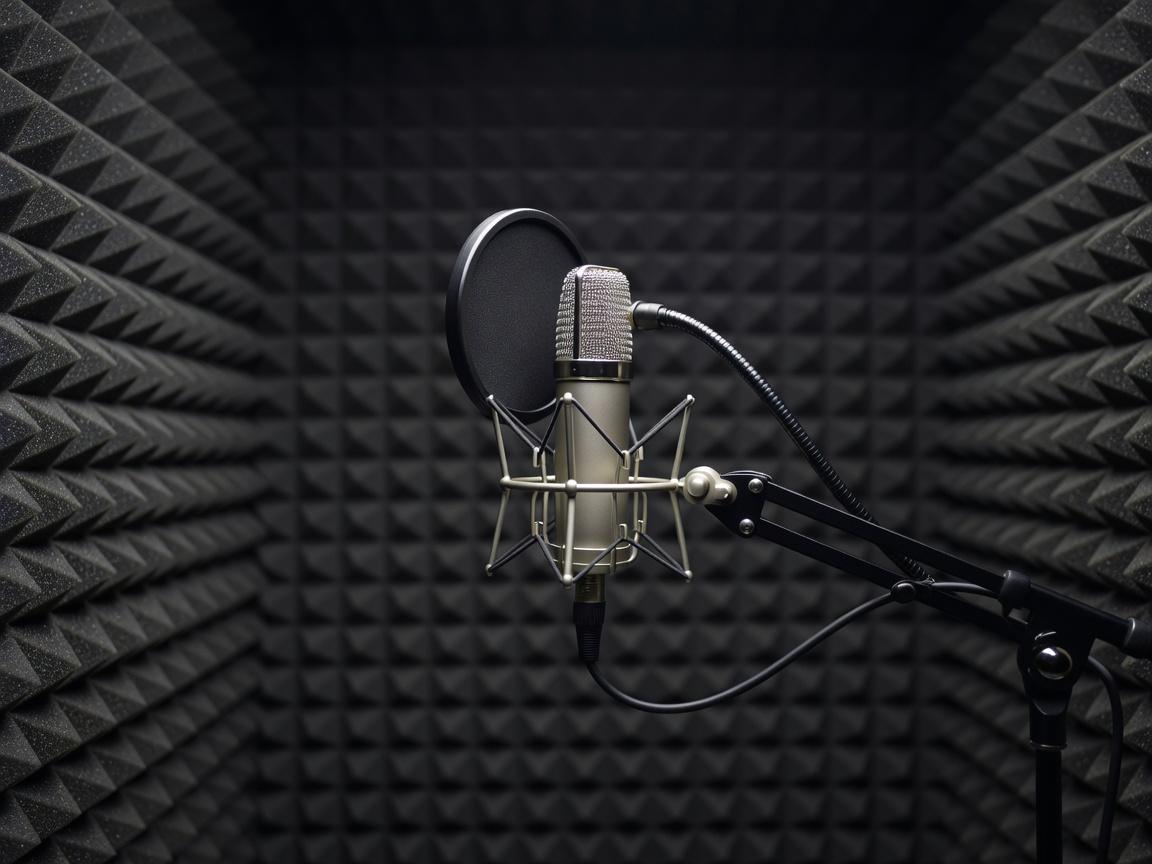
When the goal is absolute fidelity, extended frequency response, and the capture of delicate acoustic nuances, audio professionals turn to condenser microphones. Unlike the heavy moving coils of dynamic microphones, condensers operate on an entirely different physical principle, yielding a tool of immense sensitivity and detail.
The Electrostatic Principle
Condenser is an older term for capacitor, and this hints directly at how these microphones function. The microphone capsule consists of two metal plates placed in extremely close proximity. One plate is a fixed backplate, while the other is an ultra-thin, flexible diaphragm, often made of gold-sputtered Mylar. Together, they form a capacitor.
In order to work, this capacitor requires an electrical charge. When sound waves hit the flexible diaphragm, the distance between the two plates fluctuates. This microscopic change in distance alters the capacitance of the assembly. Because the charge is kept constant, the change in capacitance produces a fluctuating voltage output that directly mirrors the acoustic wave. This creates a highly accurate, very low-level electrical signal.
Powering the Condenser
Because the capsule requires an electrical charge to function, and because the resulting signal has an extremely high impedance that needs to be converted to a usable low-impedance signal via internal circuitry (an impedance converter circuit), condenser microphones require external power. Today, this is almost universally supplied as 48V phantom power, sent up the standard XLR microphone cable from the audio interface or mixing console.
Older vintage models and high-end studio modern recreations may use vacuum tube circuitry for the impedance conversion. These "tube condensers" require their own dedicated external power supply boxes, as 48V phantom power is insufficient to heat the tube and charge the capsule.
LDC vs SDC (Large vs Small Diaphragm)
Condenser microphones generally fall into two distinct categories based on the size of their capsule.
Large Diaphragm Condensers (LDCs)
Typically defined as having a diaphragm of one inch or larger, LDCs are the quintessential studio vocal microphones. They offer a rich, larger-than-life sound that tends to flatter the human voice. Because of the larger surface area, they generate a stronger signal (higher sensitivity) and generally exhibit lower self-noise than their smaller counterparts. They are heavily utilized for studio vocals, voiceovers, and as room microphones for capturing the ambient sound of drums or orchestras.
Small Diaphragm Condensers (SDCs)
Also known as "pencil mics" due to their slender, cylindrical bodies, SDCs feature diaphragms half an inch in diameter or smaller. The smaller, lighter diaphragm can react even faster to sound waves, resulting in superior transient response (the ability to accurately capture short, sharp sounds) and a more consistent off-axis frequency response. SDCs are the undisputed champions of capturing the intricate high-frequency details of acoustic guitars, string quartets, drum overheads, and grand pianos.
Advantages and Disadvantages
The primary advantage of a condenser microphone is its speed and width. The ultra-light diaphragm reacts instantaneously to sound, capturing the initial strike of a cymbal or the breathiness of a vocal with perfect clarity. Condensers generally boast a flat, extended frequency response from 20 Hz all the way up to 20,000 Hz, covering the entire range of human hearing.
However, this sensitivity is a double-edged sword. A condenser microphone will expose every flaw in a recording environment. If there is a computer fan whirring in the corner, or traffic noise outside the window, the condenser will capture it. This makes them difficult to use effectively in untreated acoustic spaces.
Furthermore, they are delicate instruments. The thin diaphragms can be damaged by high humidity, and a severe drop can permanently misalign the capsule plates or break the internal electronics. Finally, while modern condensers can handle relatively high sound pressure levels, exposing them to massive bursts of air (like a kick drum port) without a pop filter or careful placement can cause the diaphragm to bottom out against the backplate, creating a harsh distortion or even physical damage.
| Specification | Typical Condenser Profile |
|---|---|
| Transducer Principle | Electrostatic (Capacitor) |
| Frequency Response | 20 Hz to 20,000 Hz (often very flat) |
| Sensitivity | High (captures quiet details easily) |
| Power Requirement | 48V Phantom Power (or dedicated PSU for tubes) |
Condenser microphones remain the absolute pinnacle of acoustic capture technology. By selecting the correct diaphragm size and managing the acoustic environment, engineers can record audio that is virtually indistinguishable from the live event.